One-on-One Meeting Software vs. a Paper Notebook
What a notebook does well, and where it quietly breaks down over months What 1:1 software adds: private notes, per-report history, and a drafted agenda How to choose based on how many reports you h…
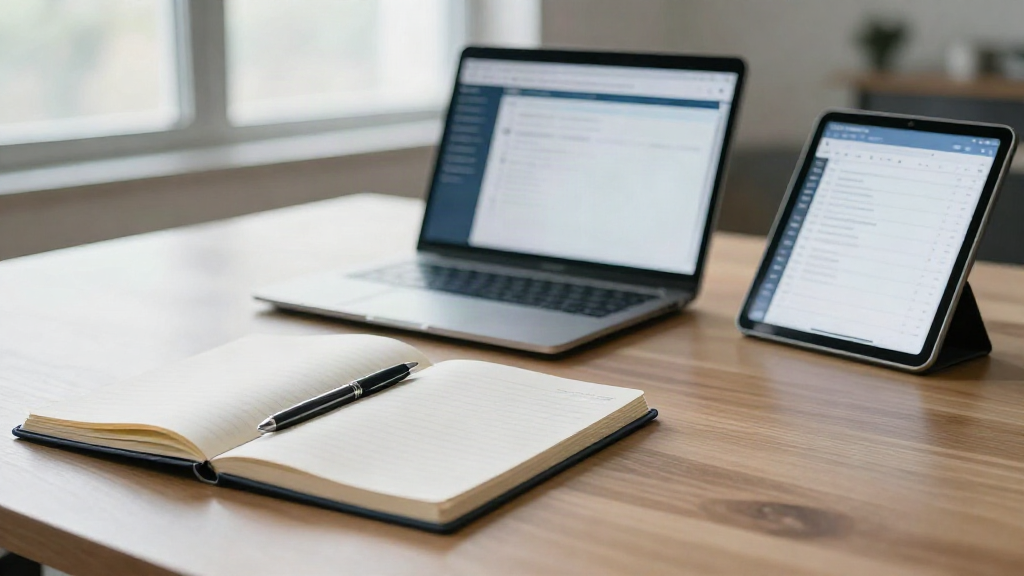
One-on-One Meeting Software vs. a Paper Notebook: What Actually Keeps You Prepared
You walk into a 1:1, sit down, and the first thing out of your mouth is "So... how's it going?" Not because you don't care. Because you can't remember what you promised last time, or what mattered to them three weeks ago.
The notebook on your desk was supposed to fix that. Buy one-on-one meeting software and the pitch says it fixes it too. So which one actually works? It depends on two things: how many people you manage, and what you tend to forget.
Here's the honest comparison.
What a paper notebook gets right
A lot, actually. A notebook is fast. You open it, you write, you close it. No login, no subscription, no setup. Nothing to learn before your Tuesday.
It's private by default. Nobody sees it. For a manager writing down something sensitive - a confidence, a health issue, a rough week - that matters more than any feature list.
And it keeps you present. There's no screen between you and the person. You look up, you listen, you jot a word or two. People notice the difference between a manager taking notes and a manager scrolling through a tool.
If that's all you need, a notebook is genuinely enough. Don't apologize for it.
Where the notebook quietly breaks down
The trouble with a notebook isn't the writing. It's the remembering.
A notebook doesn't have an index. Six months in, you have forty pages of scattered notes, a couple of dates that don't line up, and no way to answer "what did we say we'd work on?" without flipping through all of it.
It doesn't carry forward. Promises older than a week live in your head, and your head is full of everything else. Follow-ups quietly disappear. You find out when someone brings it up - usually with a little less patience than last time.
It doesn't help you prepare. Before a 1:1, the most useful thing you could read is everything you decided since the last one. A notebook can't surface that in a minute. So you don't read it, and you wing it.
And more often than you'd like, it's not even there. Lost, in a bag, at home. The people you manage don't care where it is. They just notice you forgot.
What one-on-one meeting software actually adds
Good one-on-one meeting software doesn't try to be a better notebook. It does three things a notebook structurally can't.
Private notes, kept per person
Every report gets their own space. Notes stay attached to the person they belong to, not to a date in a spiral binding. Your notes stay yours - the point is that you remember, not that anyone else can read over your shoulder.
History that survives the week
Goals, commitments, and follow-ups carry forward automatically. When you make a promise in one conversation, it shows up in the next one without you doing anything. The tool remembers the thread so you can stay in the conversation.
A drafted agenda before you walk in
This is the part a notebook simply cannot do. Instead of a blank page, you get a suggested agenda built from what you wrote last time and what's still open. You still run the conversation. You just don't start it cold.
That's the real difference. A notebook stores what you wrote. Software helps you arrive prepared.
How to choose
Skip the feature matrices. Decide with two questions.
How many people do you manage?
One or two reports, and a notebook holds up fine. You can carry that much context in your head, and the overhead of a tool isn't worth it yet.
More than three, and the math changes. You're now tracking dozens of open threads across people who each expect you to remember their story. That's exactly where memory-first software stops being a nice-to-have.
What do you actually forget?
If you forget small things - a birthday, a name - a notebook is fine. If you forget commitments you made and never followed up on, that's a pattern software breaks. Look at the last few 1:1s. If you can't say what you agreed to in each, that's your answer.
A note on honesty
Software isn't automatically better. A tool you don't open is worse than a notebook you do. If you'll keep a consistent notebook for years, keep it.
But if you've noticed the same promises slipping, the same "I'll get back to you" that never comes, the same five minutes of scrambling before every conversation - the problem isn't your note-taking. It's that a notebook can't hold the thread for you over months.
The bottom line
A paper notebook is a good tool for one thing: capturing what happens in a room. One-on-one meeting software is built for a different job - keeping what you learned private, carrying it forward, and handing you a starting point before the next conversation.
If you manage a couple of people and remember everything, stay with paper. If you manage a team and you're tired of arriving unprepared, the tool exists for exactly your week.
Mora is a 1:1 platform for managers: private notes, goals, and follow-ups per report, plus a suggested agenda before each conversation. No seat math, no sales call - you can see it and start on your own.